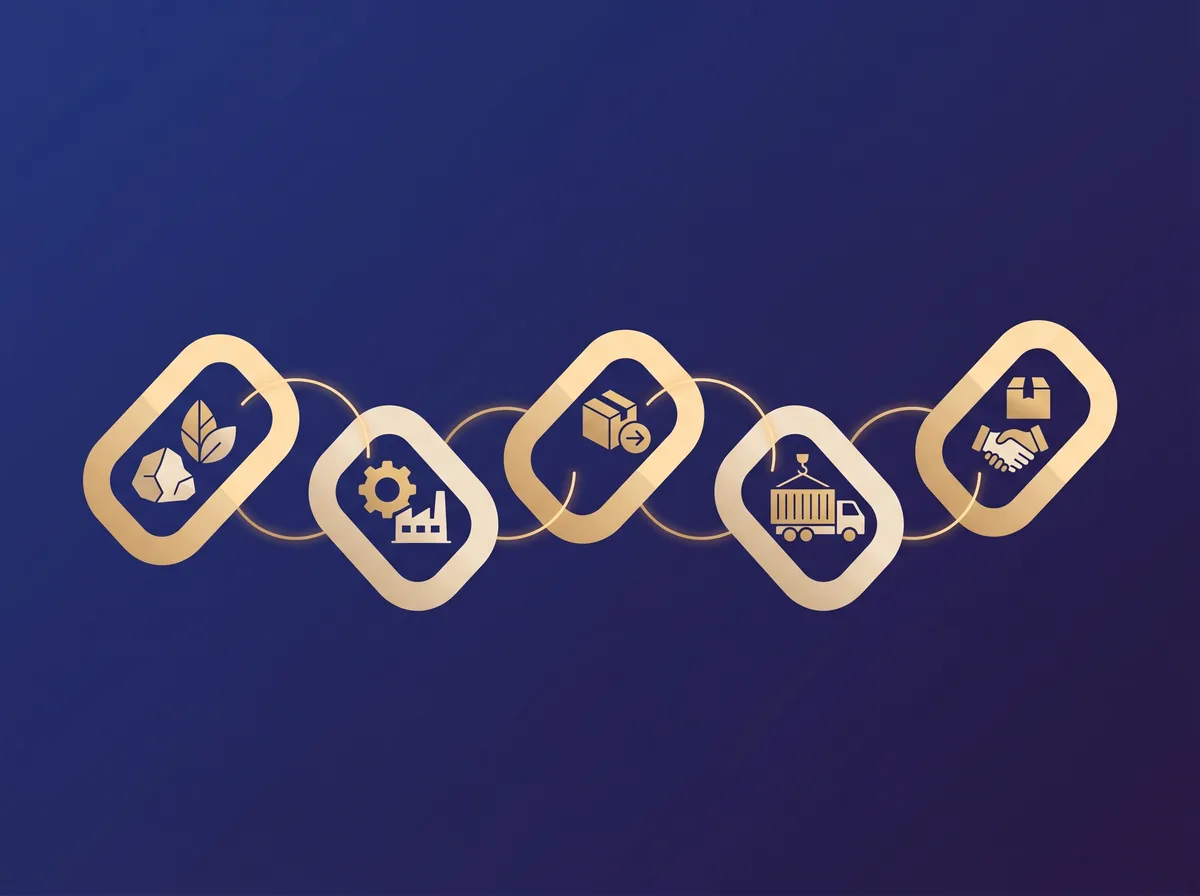
The supply chain plays an essential role in the smooth operation of many businesses. It encompasses all the steps required to deliver products or services to end consumers. Understanding how the supply chain works is crucial for ensuring effective management and optimizing business operations.
Understanding the Supply Chain
The supply chain can be defined as a complex network of activities related to sourcing, production, and distribution. It involves the coordination of multiple stakeholders, such as suppliers, manufacturers, wholesalers, retailers, and customers. Each link in the chain plays a crucial role in delivering the final product to the consumer.
Definition of the Supply Chain
The supply chain is a process that begins with the collection of the raw materials needed to produce a product. It then includes the transformation of these raw materials into a finished product ready to be distributed. Finally, it involves the distribution of the product to end customers. Each stage is interconnected and dependent on the others to ensure a smooth and efficient supply.
The Importance of the Supply Chain
A well-managed supply chain enables cost optimization, improved product quality, reduced delivery lead times, and customer satisfaction. It plays a key role in a company's competitiveness in the market. Effective coordination between the different links in the chain is essential for meeting customer demands quickly and reliably.
In France, the supply chain is a subject of great importance. The country has a diverse and dynamic economy, with many industries that depend on an efficient supply chain to ensure their growth and competitiveness in the global market.
For example, the French automotive industry is one of the most important in the world. Automobile manufacturers such as Renault and Peugeot depend on a well-organized supply chain to obtain the parts needed for the production of their vehicles. This involves the coordination of many suppliers, ranging from engine manufacturers to tyre manufacturers and electronic components suppliers.
Similarly, the French agri-food industry is renowned for its quality and diversity. The supply chain in this sector is essential for ensuring the freshness of food products and their rapid delivery to consumers. This involves the coordination of many stakeholders, such as farmers, processors, distributors, and retailers.
Furthermore, the supply chain also plays a crucial role in France's fashion sector. The country is known for its luxury brands and renowned fashion houses. To maintain their reputation and position in the global market, these brands depend on an efficient supply chain to obtain the high-quality fabrics, accessories, and materials needed for the production of their collections.
In conclusion, the supply chain is an essential element of many industries in France. It ensures the supply of raw materials, the efficient production of goods, and their rapid delivery to end customers. Effective coordination between the various stakeholders in the chain is crucial for guaranteeing the competitiveness and growth of French companies in the global market.
The Different Links in the Supply Chain
Raw Material Sourcing
Raw material sourcing is the first stage of the supply chain. It involves finding and acquiring the raw materials needed for the production of the final product. This often involves negotiations with suppliers, inventory management, and taking into account the constraints related to the availability of raw materials.
Production and Processing
Once raw materials have been acquired, production and processing are the next stages of the supply chain. This includes the manufacturing, processing, and assembly activities that transform raw materials into finished products. This stage requires careful planning in order to maximize production efficiency and to ensure product quality.
Distribution and Sales
Once products have been manufactured, they must be distributed to end customers. Distribution and sales are the final stages of the supply chain. This may involve the storage, transport, and sale of products at appropriate points of sale. Effective management of distribution and sales is essential for reaching customers quickly and reliably.
Effective Supply Chain Management
Strategies for Optimal Management
To ensure optimal supply chain management, it is important to implement effective strategies. This may include the adoption of advanced technologies such as inventory management systems, tracking and traceability tools, as well as planning and optimization software. Clear communication and close collaboration with supply chain partners are also essential for resolving issues quickly and effectively.
Challenges in Supply Chain Management
Managing a supply chain can be complex and present challenges. Some of the most common challenges include managing unexpected events such as stock-outs, production planning based on demand, managing returns and refunds, and managing relationships with external stakeholders. However, by implementing robust processes and anticipating potential problems, it is possible to overcome these challenges and to ensure an effective supply chain.
The Impact of Technology on the Supply Chain
Automation and the Supply Chain
Automation plays an increasing role in supply chain management. It enables improved efficiency and accuracy of processes, reduced labor costs, and minimized human errors. The use of technologies such as robots, barcode scanners, automated warehouse management systems, and advanced tracking and planning software has become common for optimizing supply chain operations.
The Future of the Supply Chain in the Digital Age
With the advent of the digital age, the supply chain is evolving rapidly. Technological advances such as artificial intelligence, the Internet of Things, and blockchain are revolutionizing the way companies manage their logistics operations. These technologies enable increased traceability, better resource planning, and faster and more accurate decision-making. The future of the supply chain will therefore undeniably be marked by technological innovation.
In conclusion, the supply chain is a crucial aspect of business operations management. Understanding its different stages and effectively managing its links are essential for ensuring customer satisfaction, minimizing costs, and remaining competitive in the market. With the constant evolution of technology, it is essential to stay up to date with the latest developments to optimize supply chain operations in the digital age.