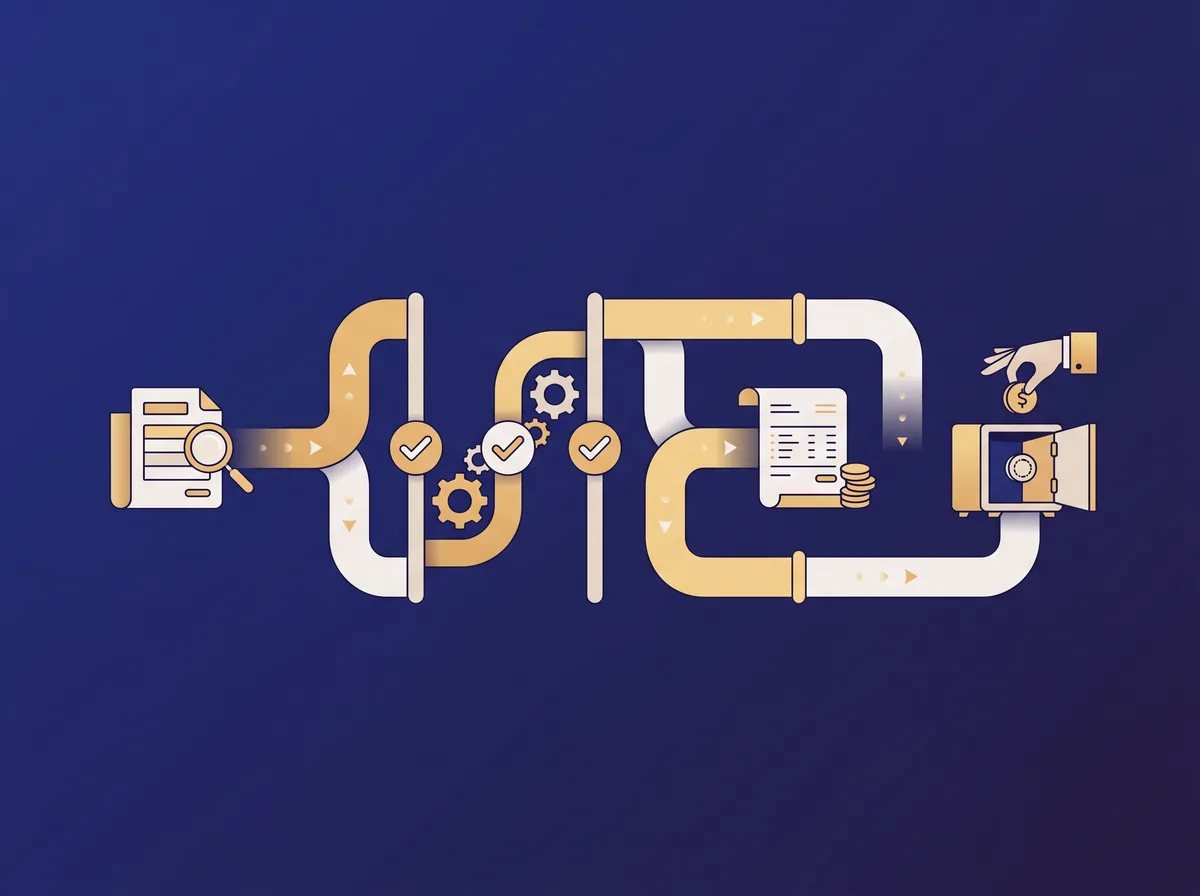
The Procure-to-Pay (P2P) process is essential for many organizations. It encompasses all steps, from identifying a need through to the final payment of an invoice. Understanding and optimizing this process is crucial for improving operational efficiency, reducing costs, and ensuring compliance. In this article, we explore the definition, objectives, and best practices for optimizing the Procure-to-Pay process.
Understanding the Procure-to-Pay Process
Definition of the Procure-to-Pay Process
The Procure-to-Pay process is a cycle of activities that begins with identifying a purchasing need and ends with the final payment of an invoice. It can be broken down into several stages, including supplier sourcing, order placement, receipt of the ordered goods or services, invoice recording, and payment.
The Procure-to-Pay process is essential for ensuring effective procurement management within organizations. It guarantees that necessary goods and services are acquired transparently and within the required timeframes. By establishing clear procedures and appropriate controls, companies can optimize their procurement operations and minimize purchasing-related risks.
The first stage of the process is identifying a purchasing need. This can be triggered by various factors such as stock depletion, equipment obsolescence, or requests from different departments within the organization. Once the need is identified, the company can move on to sourcing potential suppliers.
Supplier sourcing is a critical stage of the Procure-to-Pay process. Organizations must identify reliable and competitive suppliers capable of delivering the required goods or services within the allotted timeframes. This often requires a thorough evaluation of potential suppliers, taking into account their reputation, production capacity, financial position, and compliance with quality and safety standards.
Once suppliers have been selected, the company can move to the order placement phase. This involves preparing a detailed purchase order specifying quantities, prices, delivery timelines, and payment terms. It is essential to ensure that orders are correctly recorded and transmitted to suppliers to avoid any subsequent confusion or disputes.
After placing orders, the company must ensure receipt of the ordered goods or services. This typically involves verifying that delivered goods conform to the agreed specifications, as well as inspecting the quality and condition of the products. In the event of non-conformity or defects, appropriate measures must be taken, such as returning the products or negotiating a replacement or repair agreement with the supplier.
Once goods or services have been received, the company must record the corresponding invoices. This involves verifying the accuracy of the invoiced amounts as well as their alignment with the orders placed and the goods or services actually received. Rigorous control procedures must be put in place to prevent billing errors or fraud.
Finally, the Procure-to-Pay process concludes with the final payment of invoices. Companies must ensure that payments are made within the agreed timelines to avoid late payment penalties or supply disruptions. Implementing automated payment systems can help accelerate the process and reduce the risk of errors.
Importance of the Procure-to-Pay Process in Organizations
The Procure-to-Pay process is crucial for organizations because it ensures efficient and transparent procurement of goods and services. By automating the various stages of the process, companies can reduce errors, improve purchasing traceability, and control expenditure. Moreover, effective management of the Procure-to-Pay process can contribute to cost reduction and increased savings.
Effective management of the Procure-to-Pay process enables organizations to streamline their procurement operations and minimize purchasing-related risks. By establishing clear procedures and appropriate controls, companies can optimize their cash flow, reduce administrative costs, and improve their ability to negotiate favorable purchasing terms.
Furthermore, the Procure-to-Pay process provides organizations with greater visibility into their expenditure and allows them to make more informed purchasing decisions. By centralizing procurement information, companies can analyze trends, identify savings opportunities, and negotiate more advantageous contracts with suppliers.
In conclusion, the Procure-to-Pay process is a key element of procurement management within organizations. By implementing clear procedures, appropriate controls, and automated systems, companies can optimize their procurement operations, reduce risks, and achieve significant savings. It is therefore essential for organizations to understand and master this process in order to remain competitive in the market.
Objectives of the Procure-to-Pay Process
Improving Operational Efficiency
The primary objective of the Procure-to-Pay process is to improve the operational efficiency of the organization. This means reducing processing times, eliminating manual tasks, and automating workflows. By optimizing this process, companies can reduce errors and delays, resulting in an overall improvement in efficiency.
Cost Reduction and Increased Savings
Another important objective of the Procure-to-Pay process is cost reduction and increased savings. By streamlining purchasing processes, companies can obtain better rates from suppliers, identify savings opportunities, and control unnecessary expenditure. This enables budget optimization and maximizes the organization's profitability.
Improving Compliance and Reducing Risk
Compliance is a major concern for organizations, particularly with regard to purchasing terms, contracts, and legal obligations. The Procure-to-Pay process ensures that all stages comply with applicable policies and regulations, thereby reducing legal and financial risks for the organization.
Optimizing the Procure-to-Pay Process
Automating the Procure-to-Pay Process
One of the best practices for optimizing the Procure-to-Pay process is to automate the various stages. Automation reduces human errors, saves time, and improves transaction traceability. Using specialized software tools, companies can automate supplier sourcing, order management, receipt and invoicing, and payment tracking.
System and Process Integration
To maximize the benefits of the Procure-to-Pay process, it is essential to integrate the organization's various systems and processes. This enables better communication and collaboration between departments, reduces duplication, and provides greater visibility across the entire process. For example, integrating the inventory management system with the Procure-to-Pay process allows for better stock level control and order optimization.
Training and Skills Development
For the Procure-to-Pay process to function effectively, it is important for employees to understand and master the various stages. Adequate training on the policies and procedures related to the Procure-to-Pay process is essential. Furthermore, it is important to develop employees' skills in negotiation, contract management, and supplier relationship management.
Measuring the Success of the Procure-to-Pay Process
Key Performance Indicators (KPIs)
To measure the success of the Procure-to-Pay process, it is essential to define key performance indicators (KPIs). These KPIs enable tracking and evaluation of the various stages of the process, such as order processing time, invoice error rate, or policy compliance rate. By using these KPIs, companies can identify areas for improvement and evaluate the effectiveness of the actions implemented.
Audit and Control of the Procure-to-Pay Process
Regular audit and control of the Procure-to-Pay process are essential to ensure its compliance and proper functioning. Audits verify that policies and procedures are followed, identify potential issues, and recommend corrective actions. In addition, internal controls help detect fraud and errors, thereby ensuring the integrity of the process.
Continuous Improvement of the Procure-to-Pay Process
Finally, continuous improvement of the Procure-to-Pay process is essential to adapt to internal and external changes. Companies must regularly evaluate the various stages of the process, gather user feedback, and seek new optimization opportunities. By adopting an iterative approach, organizations can continually improve their performance and maintain their competitive advantage.
In conclusion, the Procure-to-Pay process is vital for organizations, as it enables effective procurement management, cost control, and compliance assurance. By understanding and optimizing this process, companies can improve their operational efficiency, reduce risks, and maximize their savings. By automating the various stages, integrating systems and processes, and regularly measuring performance, organizations can ensure the success of the Procure-to-Pay process.