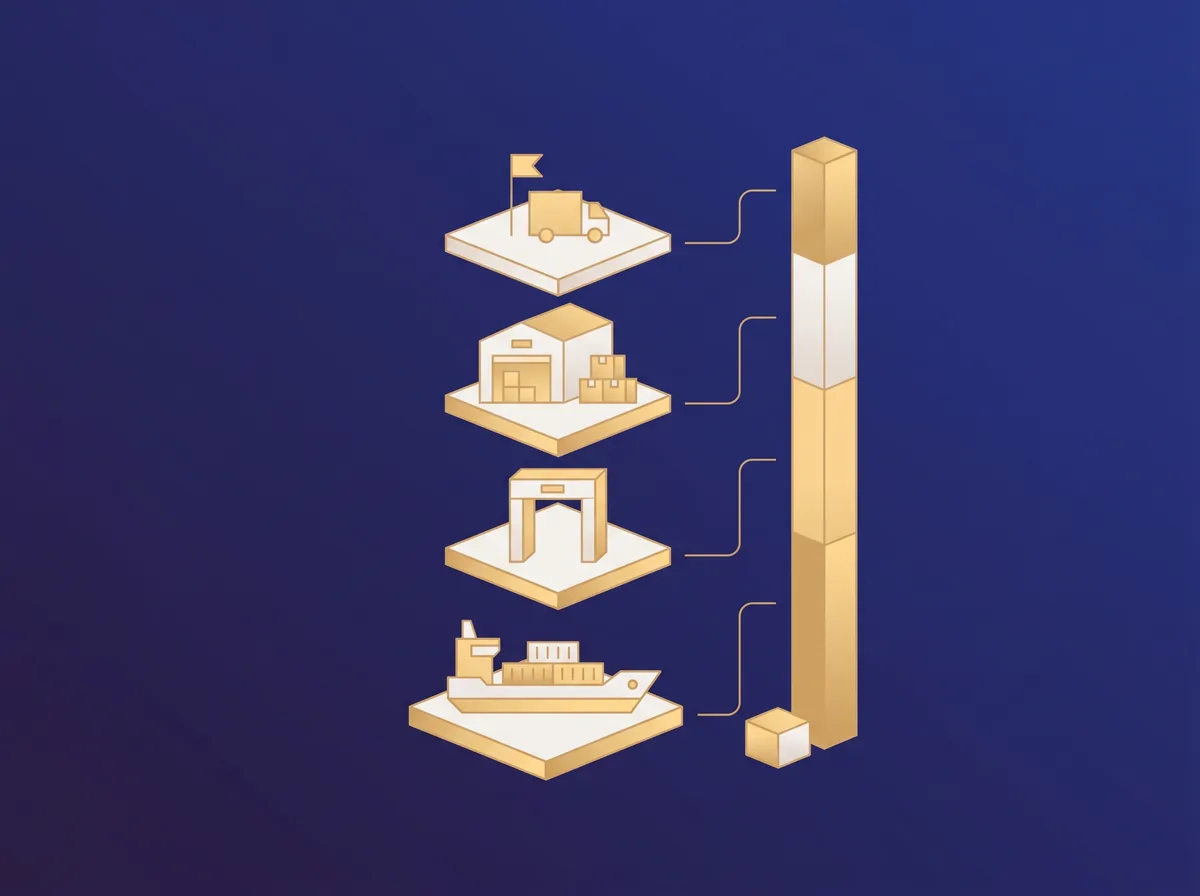
In the world of international trade, it is essential to understand the concept of Total Landed Cost (TLC). This concept represents the total cost of a product, from its manufacture through to its final arrival at the customer's location. It encompasses not only the purchase cost of the product itself, but also all the costs associated with its import, such as freight charges, customs duties, taxes, and other logistical costs.
Understanding the Concept of Total Landed Cost
Before diving into the details of calculating and optimising Total Landed Cost, it is important to understand its definition. In summary, Total Landed Cost is the total cost incurred by a company to bring a product to the destination country, ready for sale. It includes both direct costs, such as the purchase price of the product, and indirect costs, such as transportation costs and taxes.
Definition of Total Landed Cost
The definition of Total Landed Cost can vary depending on the source. However, in general, it refers to the total cost of ownership of a product, from its origin to its final destination. This includes transportation costs, customs duties, taxes, logistical costs, administrative fees, and other costs related to the import of the product. In other words, Total Landed Cost represents the total price paid by the company to get the product into the hands of the customer.
Importance of Total Landed Cost in International Trade
The importance of Total Landed Cost in international trade cannot be overstated. Indeed, it enables companies to accurately calculate the true cost of a product, which is essential for strategic decision-making. By understanding and optimising Total Landed Cost, companies can better evaluate their profitability, identify areas where savings can be made, and improve their competitiveness on the global market.
Furthermore, Total Landed Cost plays a crucial role in the management of global supply chains. By knowing the costs associated with each stage of the supply chain, companies can identify bottlenecks and inefficiencies, enabling them to take corrective measures to improve the overall efficiency of their supply chain.
It is also worth noting that Total Landed Cost can vary considerably from one country to another due to differences in customs regulations, tariffs, and taxes. Consequently, it is essential for companies to understand the specifics of each market in which they operate in order to accurately estimate Total Landed Cost and make informed decisions.
In conclusion, Total Landed Cost is a key concept in international trade. It represents the total cost incurred by a company to bring a product to the destination country, ready for sale. By understanding and optimising Total Landed Cost, companies can improve their profitability, identify areas where savings can be made, and strengthen their competitiveness on the global market.
How to Calculate Total Landed Cost
Calculating Total Landed Cost may seem complex, but it is crucial for effective cost management. It is divided into two main parts: the components of Total Landed Cost and the calculation steps.
Components of Total Landed Cost
Total Landed Cost is composed of several elements that must be taken into account during the calculation. The main components are:
- Product purchase cost
- Freight charges
- Customs duties and taxes
- Logistics costs
- Administrative fees
- Storage costs
Each of these elements contributes to the total cost of the product and must be included in the Total Landed Cost calculation.
Steps for Calculating Total Landed Cost
Calculating Total Landed Cost requires several steps in order to obtain accurate figures. Here are the general steps in the calculation:
- Identify all components of Total Landed Cost
- Assign the corresponding cost to each component
- Sum all costs to obtain the Total Landed Cost
These steps must be followed rigorously to ensure the accuracy of calculations and enable a realistic assessment of costs.
Optimising Total Landed Cost
Once Total Landed Cost has been calculated, it is important to optimise these costs in order to improve the company's profitability. Several strategies can be put in place to reduce Total Landed Cost and maximise profits.
Strategies for Reducing Total Landed Cost
To reduce Total Landed Cost, it is essential to implement effective strategies. Among the main strategies to consider are:
- Supply chain optimisation
- Negotiation of freight charges
- Use of local suppliers
- Improvement of import process efficiency
By implementing these strategies, companies can reduce the costs associated with Total Landed Cost and improve their overall profitability.
Mistakes to Avoid When Optimising Total Landed Cost
Despite the obvious advantages of optimising Total Landed Cost, there are also common mistakes to avoid. It is important not to sacrifice product quality or customer service in order to reduce costs. Furthermore, it is essential to take into account all aspects of the import process and not focus solely on one specific element.
Challenges of Implementing Total Landed Cost
Implementing Total Landed Cost can present certain challenges for companies. It is important to understand these and find solutions to overcome them.
Common Obstacles to Implementation
Common obstacles to Total Landed Cost implementation include:
- Lack of accurate cost data
- Complexity of the import process
- Resistance to change
It is crucial to acknowledge these obstacles and put in place measures to overcome them in order to maximise the benefits of Total Landed Cost.
Solutions for Overcoming Implementation Challenges
To overcome Total Landed Cost implementation challenges, companies can take several measures:
- Manage and collect accurate cost data
- Automate import processes
- Train employees in the use of Total Landed Cost
By putting these solutions in place, companies can ensure that Total Landed Cost implementation takes place efficiently and without major difficulties.
The Future of Total Landed Cost
The future of Total Landed Cost is promising, with current trends continuing to influence this concept and encouraging forecasts for its future evolution.
Current Trends Influencing Total Landed Cost
Several current trends are influencing Total Landed Cost, including:
- Rising transportation costs
- Regulatory and customs developments
- The growth of e-commerce
These trends require constant analysis of Total Landed Cost and adaptation to the new challenges and opportunities that arise.
Forecasts for the Future of Total Landed Cost
For the future of Total Landed Cost, greater integration of information and communication technologies can be expected. Advances in these areas will enable more accurate data collection and faster cost analysis, contributing to more effective Total Landed Cost management.
In conclusion, Total Landed Cost is a key concept in international trade. It enables companies to accurately calculate the total cost of a product and make strategic decisions based on realistic information. Understanding and optimising Total Landed Cost is essential for improving company profitability and remaining competitive on the global market. By staying attentive to current trends and anticipating the future, companies can make the most of Total Landed Cost and maximise their success on the international stage.